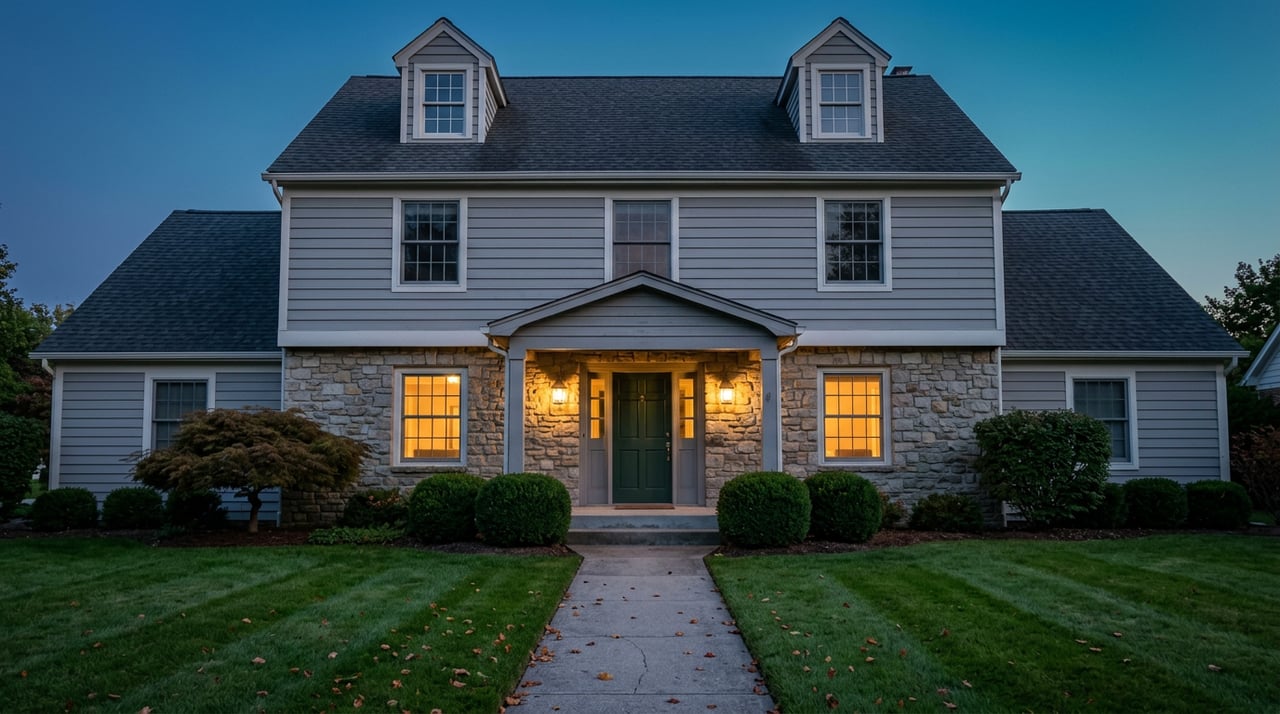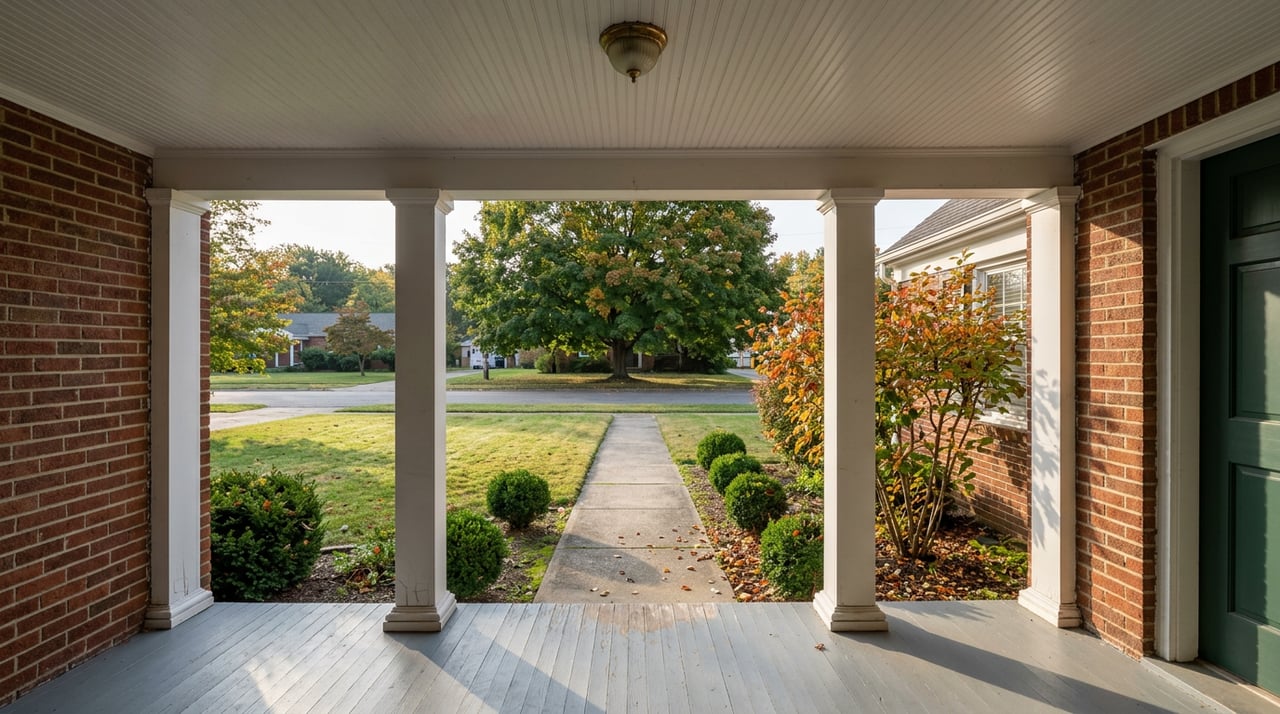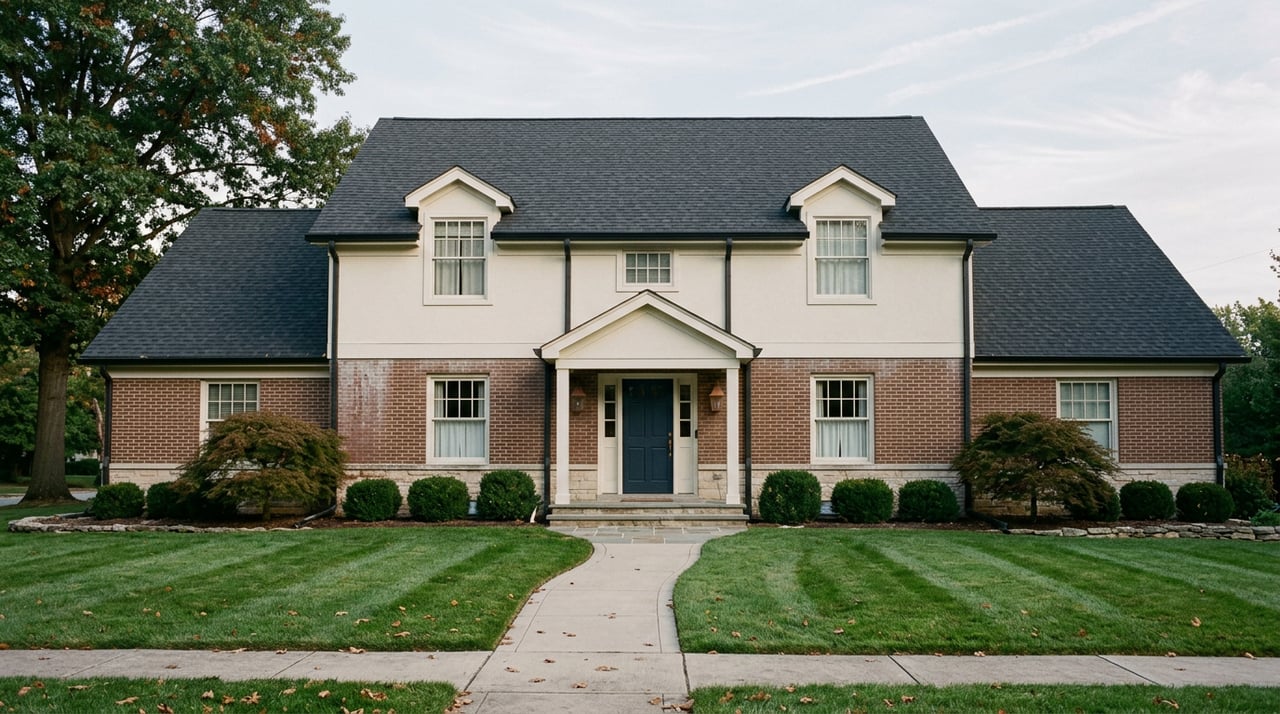
Two listings go up in Upper St. Clair within a week of each other. Same price. Same school boundary. One is a mile from the other. A buyer touring both assumes they're choosing between two versions of the same thing, maybe a kitchen that's been updated versus one that hasn't. Then the inspection reports come back, and the two houses might as well be from different countries. One has a basement with poured concrete walls and eight-foot ceilings, ready to finish for the cost of drywall and flooring. The other needs a new HVAC system before anyone can knock down a wall, plus a French drain before the contractor will even start.
The gap isn't condition. It's the decade the house was built in, and in Upper St. Clair, that decade still does most of the work that the sale price doesn't.
Three Building Booms, Not One
Upper St. Clair didn't fill in all at once, and the order it filled in still shows up on a walk-through today. The Washington Road corridor, the township's main artery also known as US-19, filled in through the 1960s and 70s with split-levels and bi-levels. Boyce and Hastings, the pockets just off that corridor, built out through the 1980s and 90s with larger colonials as the township's reputation and school district drew families further from the main road. What's left after that is infill: individual lots and small subdivisions where a custom builder is still putting up one house, or four, on land that never got developed in the first two waves.
Those three waves aren't spread evenly across the price range. A 1970s split-level and a 2026 custom build can list for numbers close enough that a buyer sorting by price alone will see them back to back. What separates them isn't just square footage. It's fifty years of building code, mechanical systems, and foundation practice.
What a 1971 House Gives You That a New Build Doesn't
The median age of a house in Upper St. Clair sits right around 1971, and that number matters more than it looks. Homes from that first wave were built with poured concrete basement walls, decent ceiling height, and a basement that's often already partly finished or clearly built to be. Local renovation contractors who work across the South Hills describe this as a real head start compared to older housing stock in neighboring Mt. Lebanon, where plaster walls and low, damp cellars make finishing work slower and more expensive. In Upper St. Clair, a buyer looking at a raw basement is often looking at a lower lift than the same project would be one township over.
The trade-off shows up in the mechanical systems. A house from the 1980s or 90s buildout in Boyce or Hastings tends to arrive with HVAC that was sized for a house with walls, not for the open floor plan a lot of move-up buyers want to create. Contractors who work in the township regularly report that once a buyer opens up a kitchen or knocks down a wall between living spaces, the existing HVAC can't keep up and needs to be replaced or rezoned as part of the same project. That's a cost a buyer touring a 1980s colonial should budget for before falling in love with the layout, not after the offer is accepted.
Here's how the three waves compare on the things that actually affect a renovation budget:
| Build Era | Where You'll Find It | Basement Condition | Mechanical Systems |
|---|---|---|---|
| 1960s-70s | Washington Road corridor | Poured concrete, good ceiling height, often unfinished but ready | Original systems typically need full replacement |
| 1980s-90s | Boyce and Hastings pockets | Similar poured-concrete advantage | Often undersized once floor plans open up |
| Infill and custom, ongoing | Scattered lots, small subdivisions | New, code-current, sometimes finished at purchase | New, but priced into the build |
The New-Construction Math Doesn't Work the Way Buyers Assume
Buyers who decide they want something newer often assume "new construction in Upper St. Clair" is a category with real depth to it. It isn't. Fewer than one in a hundred homes in the township were built in the current decade, based on property records tracking construction year across the housing stock. The rest of the newer supply built since 2000 makes up a modest slice too, nowhere close to the volume you'd find in a township still actively subdividing farmland.
What that means in practice: as of this research, Foxlane Homes has exactly one homesite left in its four-house community off McMurray Road. Benjamin Marcus Homes is finishing out its Tree Top Acres project, a handful of custom lots, with three sites still available for a buyer to design their own home, and running a separate low-maintenance townhome community called Siena at St. Clair with an elevator-ready floor plan built for buyers who want single-level living without leaving the township. Maronda Homes shows up as the most consistently active builder across Upper St. Clair's remaining new-construction inventory. None of this is a pipeline. It's a short list of specific, countable opportunities that will be gone by the time the next one opens.
A buyer chasing new construction here isn't shopping a category. They're watching a handful of individual builders release individual lots, one at a time, in a township that's mostly built out.
The price range in Upper St. Clair isn't describing one house with some variation. It's averaging three different products that happen to overlap in the same numbers.
The One Line Item Almost Every Renovation Budget Needs
Whatever era a buyer ends up in, one issue crosses all three. Upper St. Clair sits on hillside terrain, and sloped lots are common enough that local design-build firms report drainage work, French drains, sump pump upgrades, sometimes a retaining wall, shows up in roughly half of their projects in the township. That's not a niche concern reserved for homes at the bottom of a hill. It's close to a coin flip for any renovation project here, and it's worth asking about before signing a contract for an addition or a walkout basement conversion, not after the contractor opens up the foundation and finds water.
Whole-home renovations in the township currently run in a wide band, often somewhere between $200,000 and $500,000 depending on how much of the structure changes, according to local design-build pricing. Where a given project lands in that range often comes down to which of the three eras the house was built in, and whether drainage turns out to be part of the scope.
What This Means If You're Comparing Two Listings Right Now
If you're deciding between two Upper St. Clair houses at similar prices, the build era answers questions the listing photos won't. Ask when the house was built, not just what year the kitchen was updated. Ask whether the basement has been touched, and if not, whether it's poured concrete with real ceiling height, the kind of head start that's common in this township. Ask when the HVAC system was last replaced, especially in anything from the 1980s or 90s buildout, before you plan to open up a wall. And if the lot has any grade to it at all, ask about drainage before drainage becomes your first change order.
Permits for structural work run through the township's Department of Community Development, and buyers planning a near-term renovation should factor that timeline into their first year in the house rather than assuming work can start the week after closing.
None of this changes whether Upper St. Clair is the right township. It changes which house inside it is the right house, and what it will actually cost you to make it yours.
A Few Questions Buyers Ask
Does an older build year mean more problems at inspection? Not necessarily. The 1960s-70s stock in Upper St. Clair was built with foundations and basement construction that hold up well. The issues that show up tend to be mechanical systems and drainage, not the bones of the house.
Is new construction worth waiting for? It depends on how patient you can be. The new-construction supply in the township is small and moves in single lots rather than large developments, so waiting for the right opportunity could mean waiting through several selling seasons.
Should I get a second opinion on HVAC before I renovate? If the house was built in the 1980s or 90s and you're planning to open the floor plan, yes. A mechanical contractor can tell you before closing whether the existing system will handle the new layout or whether it's a line item you should be negotiating into your offer.
Every house in Upper St. Clair tells you which decade it came from if you know where to look, and that decade tells you more about your first year of ownership than the listing price ever will. If you're comparing homes here and want someone to walk the build-era question through with you before you write an offer, Wendy Weaver knows this township one street at a time. Reach out for a conversation, or start with a home valuation to see where your own numbers fit into the picture.